
Radio entertainment: plan room for spontaneity
A lively programme needs a structure underneath its apparent ease. The audience should know where a segment is going without hearing the machinery.
Define the segment’s promise
Write one sentence explaining why this segment belongs in the programme. Is it a game, an interview or a commentary? Make the premise understandable without earlier episodes. Prepare an opening, a turn and an exit. A running joke should have an accessible entry point for a new listener, rather than requiring insider knowledge.
Set limits before going live
Agree what a guest or caller understands about participation and publication. Define how the producer can interrupt for a factual correction or a harmful disclosure. Humour still needs accurate attribution when it refers to a real person. Keep a clearly signalled distinction between a performed character, a parody and a factual account.
Design timing and recovery
Build a rundown with flexible and fixed segments. Prepare a short bridge for a missing guest and an alternative if an audio clip fails. Time the planned material with real delivery, including laughter and pauses. After recording, review whether the segment’s conclusion was clear. Edit repetitions that slow the promise without removing context from someone’s answer.
Practice pathway
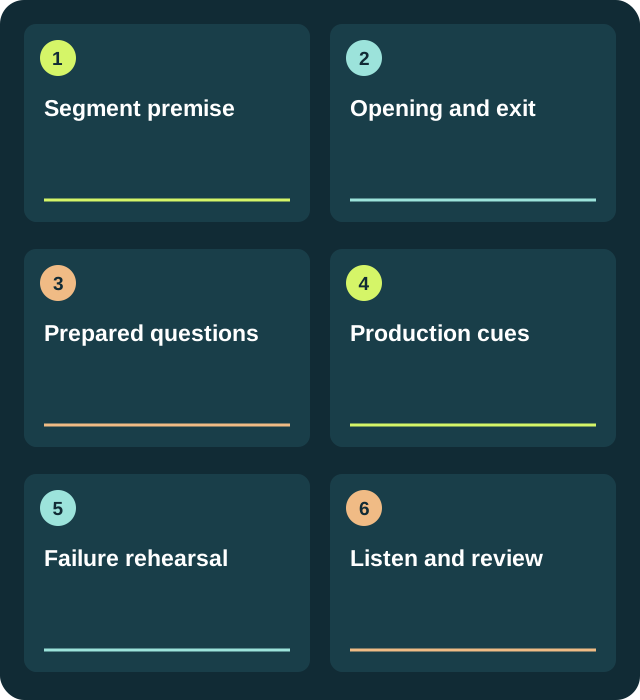
- Segment premiseRecord the decision and keep a version you can review.
- Opening and exitRecord the decision and keep a version you can review.
- Prepared questionsRecord the decision and keep a version you can review.
- Production cuesRecord the decision and keep a version you can review.
- Failure rehearsalRecord the decision and keep a version you can review.
- Listen and reviewRecord the decision and keep a version you can review.
A piece with clear limits
Four-minute segment: premise 20 s, two contributions of 60 s, turn 40 s, response 40 s, exit 20 s. Total: 240 seconds. Prepare a fifteen-second alternative close if an answer runs long. Do not cut a sentence in a way that changes its meaning.
Try it
Record a four-minute entertainment segment with a one-line premise, a ninety-second interview and a planned closing. Test a version with the guest absent and a different bridge.
Project deliverable
A reviewed piece, its source sheet and a note explaining what changed.
Download a working template
A pathway, worked example and six checks in an editable file. No account.
Download TXT ↓Review before publishing
Do not stage a caller, endorsement or spontaneous audience reaction and present it as authentic.
Frequently asked questions
Can I enroll through this page?
The 2024–25 catalog informs today’s self-directed guides. No enrollment or accredited qualifications are offered.
What do I need to practise?
Start with this guide’s exercise and template. Use a document for sources and, for audio or video, a device that can record a test you can review. Choose material you have permission to use.
How do I review the result?
Record a four-minute entertainment segment with a one-line premise, a ninety-second interview and a planned closing. Test a version with the guest absent and a different bridge.
Sources and provenance
- Reuters Journalistic Standards
- W3C WAI: Making Audio and Video Media Accessible
- Historical catalog · 2025
The example and pathway are new editorial work; historical sources document the former topic, not a current offer.