
Advanced sports analysis: turn observations into a testable argument
An analysis is stronger when another reader can trace each inference back to the match, the dataset or the interview that supports it.
Make the claim falsifiable
Replace a broad judgement such as “the team lost control” with a specific question about a period, a location or a repeated sequence. Record the matches and minutes examined. Choose a comparison period before selecting highlights. Identify what observation would weaken the claim, not only what would make a convincing montage.
Separate evidence layers
A match event, a measured statistic and an interpretation are different layers. Keep them labelled in notes and graphics. State the source, coverage and definition of each metric. A small sample may reveal a pattern worth checking without establishing a general rule. Avoid combining statistics with incompatible definitions or providers without explaining the difference.
Edit for fair explanation
Show the sequence needed to understand an example and avoid cutting away contrary evidence. In a written piece, link the underlying dataset when you can. For a video or podcast, give enough verbal context to identify the moment. Invite another reader to challenge the argument before publication and document corrections in the analysis file.
Practice pathway
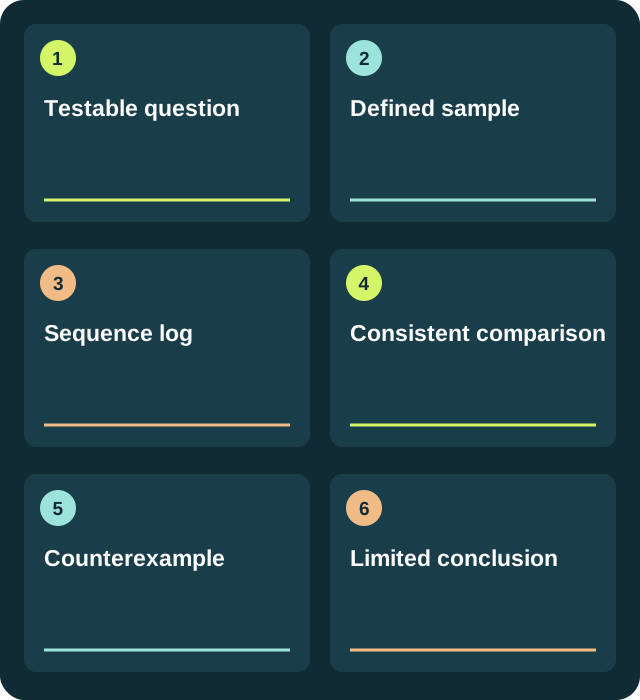
- Testable questionRecord the decision and keep a version you can review.
- Defined sampleRecord the decision and keep a version you can review.
- Sequence logRecord the decision and keep a version you can review.
- Consistent comparisonRecord the decision and keep a version you can review.
- CounterexampleRecord the decision and keep a version you can review.
- Limited conclusionRecord the decision and keep a version you can review.
A piece with clear limits
Fictional sample: five box entries before a change and eight after. Log observed minutes, opponent, score and the definition of an entry. The increase is 60%, but this alone does not explain a tactical improvement. Look for a sequence that challenges your hypothesis.
Try it
Select three comparable sequences from one match. Code the location, outcome and supporting observation. Write one claim, one counterexample and one limitation before producing a two-minute explanation.
Project deliverable
A reviewed piece, its source sheet and a note explaining what changed.
Download a working template
A pathway, worked example and six checks in an editable file. No account.
Download TXT ↓Review before publishing
Do not treat a correlation as a tactical cause, or a small sample as a player’s permanent characteristic.
Frequently asked questions
Can I enroll through this page?
The 2024–25 catalog informs today’s self-directed guides. No enrollment or accredited qualifications are offered.
What do I need to practise?
Start with this guide’s exercise and template. Use a document for sources and, for audio or video, a device that can record a test you can review. Choose material you have permission to use.
How do I review the result?
Select three comparable sequences from one match. Code the location, outcome and supporting observation. Write one claim, one counterexample and one limitation before producing a two-minute explanation.
Sources and provenance
- Reuters Journalistic Standards
- W3C WAI: Making Audio and Video Media Accessible
- Historical catalog · 2025
The example and pathway are new editorial work; historical sources document the former topic, not a current offer.