
Narrative journalism: build a scene without inventing it
A reported scene can have character, tension and detail while keeping every factual element traceable. Narrative form does not excuse reconstruction without evidence.
Keep a scene ledger
For each scene, record who observed it, when it happened and what documents support it. Separate direct observation from a later account. Do not write a private thought as fact unless the person described it and you attribute that account. Record sensory detail only when it is observed or explicitly sourced.
Build an honest sequence
Choose the sequence that helps the reader understand the story. If events are presented out of chronological order, make the change clear. A composite character or reconstructed conversation must not be smuggled into reported nonfiction. Quotation should preserve meaning and context; polished dialogue is not a licence to invent words.
Revise with an evidence pass
Read the draft once for rhythm and once for factual support. Mark each assertion and link it to notes. Ask whether a scene overstates what the reporter knows. Give people a fair opportunity to answer significant claims, and keep the response in context. A strong ending should arise from the reporting rather than an imagined resolution.
Practice pathway
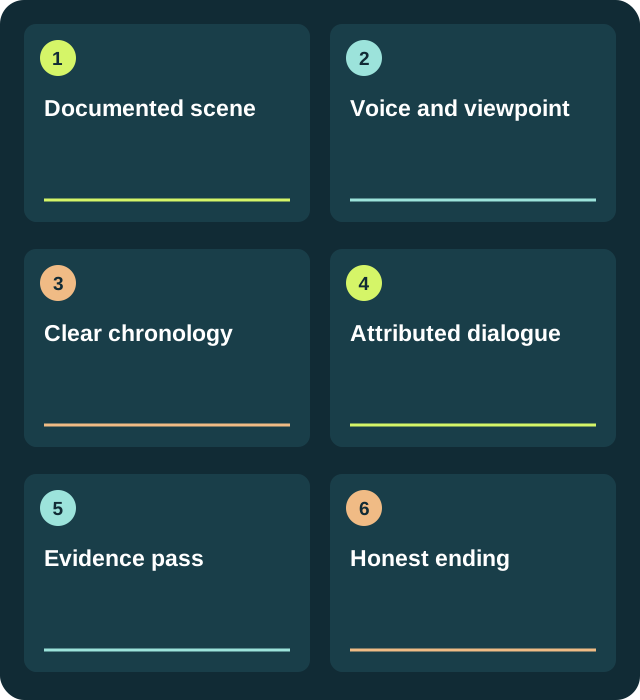
- Documented sceneRecord the decision and keep a version you can review.
- Voice and viewpointRecord the decision and keep a version you can review.
- Clear chronologyRecord the decision and keep a version you can review.
- Attributed dialogueRecord the decision and keep a version you can review.
- Evidence passRecord the decision and keep a version you can review.
- Honest endingRecord the decision and keep a version you can review.
A piece with clear limits
Fictional detail: “she closed the notebook before answering” can be reported if observed. “She knew she would lose” claims access to a private thought: attribute an actual statement or remove it. Mark the draft O for observed, A for attributed and D for documentary.
Try it
Observe a public activity you can safely report on for twenty minutes. Write a 400-word scene, then annotate each detail as observed, attributed or documentary. Remove details without support.
Project deliverable
A reviewed piece, its source sheet and a note explaining what changed.
Download a working template
A pathway, worked example and six checks in an editable file. No account.
Download TXT ↓Review before publishing
Do not invent dialogue, merge real people into an undisclosed composite or use an image that falsely depicts an actual event.
Frequently asked questions
Can I enroll through this page?
The 2024–25 catalog informs today’s self-directed guides. No enrollment or accredited qualifications are offered.
What do I need to practise?
Start with this guide’s exercise and template. Use a document for sources and, for audio or video, a device that can record a test you can review. Choose material you have permission to use.
How do I review the result?
Observe a public activity you can safely report on for twenty minutes. Write a 400-word scene, then annotate each detail as observed, attributed or documentary. Remove details without support.
Sources and provenance
- Reuters Journalistic Standards
- W3C WAI: Making Audio and Video Media Accessible
- Historical catalog · 2025
The example and pathway are new editorial work; historical sources document the former topic, not a current offer.