
Football commentary: describe the action before judging it
Good commentary gives the listener a location, a sequence and a reason to care. Preparation makes spontaneous description more accurate.
Prepare a reference sheet
Verify names, pronunciation, shirt numbers and the likely formations from official team information. Date your sheet: a late lineup change can make a prepared introduction wrong. Note a small number of useful facts with their sources. Separate a statistic about one competition from an all-career figure. Mark uncertainty instead of filling gaps from memory.
Describe a sequence
Practise explaining where the ball is, who has it and where play is moving. Let a decisive moment finish before adding analysis. A radio audience needs more spatial detail than a television audience. The commentator follows action; an analyst can explain a pattern during a pause. Agree a handover cue so neither voice competes with the other.
Review accuracy and tone
Listen back to a short passage with the video hidden. Can another person reconstruct the move? Check whether you guessed a player or described an injury as a diagnosis. Compare an excited passage with a quiet one: both need intelligible words. Keep language consistent for women’s and men’s football and avoid turning a player’s identity into a stereotype.
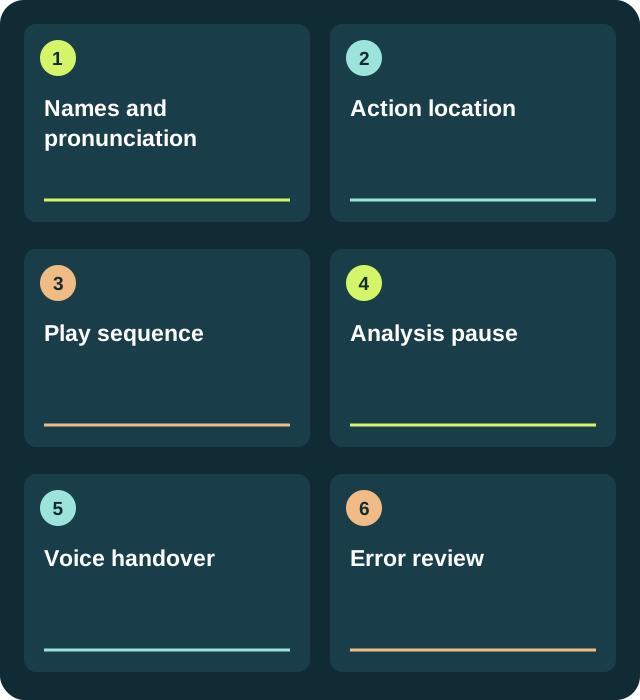
Practice pathway
- Names and pronunciationRecord the decision and keep a version you can review.
- Action locationRecord the decision and keep a version you can review.
- Play sequenceRecord the decision and keep a version you can review.
- Analysis pauseRecord the decision and keep a version you can review.
- Voice handoverRecord the decision and keep a version you can review.
- Error reviewRecord the decision and keep a version you can review.
A piece with clear limits
Fictional move: minute 62, blue team, right flank, pass into the box, shot wide. Describe location and action first, then a possible pattern. If you cannot identify the shooter, do not guess a name; verify it at the next pause.
Try it
Commentate on two minutes of a legally available match clip, then replay it without watching. Log every mistaken name and missing location. Record the same passage again after correcting the reference sheet.
Project deliverable
A reviewed piece, its source sheet and a note explaining what changed.
Download a working template
A pathway, worked example and six checks in an editable file. No account.
Download TXT ↓Review before publishing
Match footage and commentary rights vary. Use material you can lawfully study or publish; do not imply broadcast permission.
Frequently asked questions
Can I enroll through this page?
The 2024–25 catalog informs today’s self-directed guides. No enrollment or accredited qualifications are offered.
What do I need to practise?
Start with this guide’s exercise and template. Use a document for sources and, for audio or video, a device that can record a test you can review. Choose material you have permission to use.
How do I review the result?
Commentate on two minutes of a legally available match clip, then replay it without watching. Log every mistaken name and missing location. Record the same passage again after correcting the reference sheet.
Sources and provenance
- Reuters Journalistic Standards
- W3C WAI: Making Audio and Video Media Accessible
- Historical catalog · 2025
The example and pathway are new editorial work; historical sources document the former topic, not a current offer.